

What is a PFO?
PFO (Patent Foramen Ovale) is a flap that remains open in one’s heart since childbirth. The flap permits blood to flow from one side of the heart to the other. Most people will never know they have a PFO. PFO’s are not tested for without reason. So for those of us that come to understand they have a PFO it is usually because of a symptom or result such as a stroke or if you’re a Scuba diver like me, DCI (Decompression Illness)/ DCS (Decompression sickness), more commonly known as the Bends.
My diving background
For those of you that don’t know me, I have been a Scuba diver for over 11 years. I discovered Technical diving early on in my diving career and completed several technical diving courses which granted me access to dive in various set ups such as Sidemount, Twins, CCR (Closed Circuit Rebreather), to use mixed gases <100% O2 and extend my dive depths and times. During this time I dived to maximum depths of 53 metres, I completed various decompression dives, I enjoyed extended long dives on Sidemount, at times up to 3 hours in length. I am a professional underwater Cinematographer and film 6k RED stock footage (visit my website www.anitaongmedia.com.au or search me on vimeo/facebook or instagram AnitaOngMedia to view some of my work or follow my diving adventures).
The symptoms
Then one Winter, whilst we were driving home from Julian Rocks, New South Wales I felt a sore pain in my breasts. When I got home there was some red swelling on the area and the following day it had vanished. The dive site itself I had done dozens of times over the years. The maximum depth being 24 metres with an average depth of 15 metres on the first dive and often the second dive would be shallower again. I hadn’t been exerting myself, I hadn’t ascended or descended fast, nor had I come close to my decompression limit, and I had completed a safety stop as normal. As I had done everything right I put the pain down to my dry suit and compressing myself too much with not enough air in the dry suit.
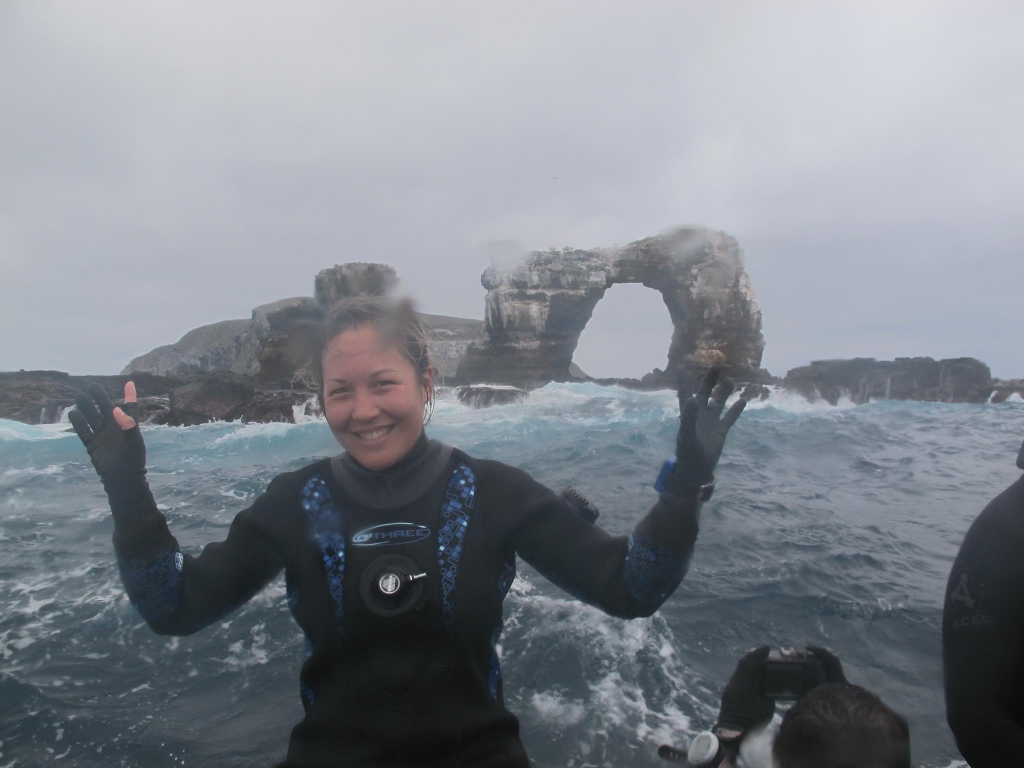
My Dry suit is made of crushed neoprene so its pretty comfortable and I figured that I probably didn’t realise how little air I had in there. Below is a photo of me in the dry suit when I was diving the Galapagos years prior to my symptoms. On that particular trip we were diving 3-4 times a day off a liveaboard in strong currents in cold water.
This skin condition happened a few more times during Winter at Julian Rocks and another dive site at Stradbroke Island called Flat Rock. Flat Rock, a bit deeper with maximum depth at 27 metres average depth 20 metres. In all cases the following day I would be fine again and any physical evidence had vanished.
After Winter it didn’t happen any more, I dived every weekend in Summer weather permitting, these same sites and had no problems. So I assumed this had something to do with my dry suit. As I had experimented with putting more air in the dry suit during Winter and it had not prevented the feeling I thought perhaps it was an allergic reaction to the material, my undergarments or my body sweat (dry suit divers sweat in their dry suits). Adults can become susceptible to allergies all of a sudden and I already had a skin condition called Dermatographia.
Dermatographia is an allergic reaction caused when antibodes are released in the blood and respond to things like scratching, pressure, and mild irritation such as clothing rubbing against the skin. The body then releases histamines which cause a rash and welts or swelling. The condition is also more commonly known as skin writing. I have had the skin condition since my 20’s and it has never impacted me much, if I have a flare up I just take an antihistamine or apply some steroid cream and it typically clears up within a day.
Prior to the following Winter I decided to invest in a thick wetsuit and see if that would solve the problem. I bought a 6/7mm wetsuit. However, every now and then I would experience the same skin issues. It would start with being sore and then I would notice some swelling and redness, often in my chest, arms and abdomen. It was at this point, most people would assume they had a skin bend or rash relating to DCI. In hindsight, it was stupid not to seek medical help in the beginning, if not at least at this stage.
However, I didn’t seek medical help. When I ask myself why now, I think subconsciously I didn’t want to believe it. I wanted to come up with any other plausible reason that it could be something other than a skin bend. After all I had been diving for over a decade, the same dive profiles, the same dive sites, safe diving, diving within NDLs (No Decompression Limits) so how could it possibly be DCI? It didn’t make sense to me and I didn’t want to believe it either.
Surprisingly it was never the dives when I pushed my limits. It was never the deep dives, decompression dives, long dives when I got a skin bend. It was always the recreational dives within 20 – 30 metres, it was always only in Winter when it was cold, and it was always only on AIR as opposed to Nitrox or other mixed gases. I guess that’s proof that Nitrox makes a huge difference when it comes to off gassing! I mean I did a decompression dive in Winter, in my Dry suit, to 53 metres and I didn’t get a skin bend. The only difference was the gas I was consuming and making decompression stops on the way up. It was also strange that it started to happen to me when I had been diving for such a long time with no symptoms at all.
Getting diagnosed
We had just finished my second Winter of this happening, and I was talking to my friend Mark about the problem. I was thinking of going to a skin specialist at the time and Mark suggested it may be a PFO. He explained to me that two of our diving friends had had PFOs and found out about them by getting an Inner Ear bend and Skin bend. He said they had completed a procedure to fix the PFO and were now diving again as normal.
After finally realising and admitting to myself I had likely been getting a skin bend all along over the last two Winters, I got a referral to visit the hyperbaric doctor Graeme Kay at Wesley hospital. (https://www.wesleyhyperbaric.com.au/wesleyhyperbaric/our-team/). As a side note unless your GP (General Practitioner) specialises in diving medicine I would not advise seeking medical help through them as they have extremely limited knowledge about diving medicine. Graeme reinforced my thoughts that I was getting skin bends and told me to get a bubble study done which would give me a clear diagnosis of whether or not I had a PFO.
Graeme also explained the risks of diving with a PFO. PFO’s whilst they allow the blood to travel from either side of your heart, so too do they allow nitrogen bubbles to travel. A PFO not only makes a person more susceptible to DCI but it can cause a stroke. Graeme explained that a diver would most likely feel fine, probably surface and signal they were OK and then have a stroke on the surface.
For the bubble study I got a echocardiogram (ultrasound) of my heart. An IV (intravenous) was inserted into a vein in my arm. They injected saline mixed with a small amount of air (to create tiny bubbles). The fluid then circulated to the right side of my heart and could be seen on the ultrasound. I was asked to get into different positions and cough which increases pressure in the heart’s right side. For those of you that don’t have a PFO, normally at this stage your lungs would simply filter out these bubbles. If you do have a PFO however, some bubbles travel through this flap and appear on the left side of the heart. It is here where damage can be done as the left side of the heart has access to the brain.
The results were sent to my Cardiologist Dr. Peter Hadjipetrou at St Andrews hospital. I chose this doctor because my friend had had his PFO closed with him and recommended him.
He confirmed that I had a PFO and explained the procedure to me.
Diving with a PFO
I chatted to my friends who had the procedure done and did some more research. I booked in the procedure, however when I went to check my private health insurance I soon realised that my heart was not covered in my policy. Probably because when I took out my policy I was in my mid 20s thinking I’m young, healthy and fit, and I don’t have any heart disease in my family I don’t need my heart covered! Medibank my health insurance provider advised me I could still add my heart in now but would have to wait 12 months until I could enact the policy to cover any claim. I added my heart onto the policy and then begun the wait.
I booked my PFO procedure in for the end of January. There is always great diving conditions in January and with the La Nina coming I anticipated February might blow out with torrential rain and cyclonic weather. I figured it was then the best time of the year to miss diving as weather would probably prevent it anyway and it was also when the seasons start to change and there is less animal life in April and May.
I chose to continue to dive whilst waiting for the operation. I dived conservatively and kept shallow, did slow descents and ascents, long safety stops and always staggered stops on the way back up, I also limited my dives a day so would often opt out of dives on liveaboards. It certainly sucked when my friends were diving deeper and seeing Hammerheads or having an awesome dive that I had to stay on the boat for. After analysing the many times I had developed a skin bend in the past I had my own formula for preventing it during this time. Typically for me diving shallower than 15 metres posed no real issues at all, and for repetitive dives I could do one dive a day in the range of 20+ metres as long as the other dive was a shallow one. I didn’t get a skin bend again during the 12 months I was waiting for the operation.
The PFO Procedure
I checked in at 6.30am. I had been asked to fast from midnight so it was pretty easy diet wise.
I was taken into a ward and asked to get naked and into the hospital gown and socks. I could hear razors going off and the nurses were shaving everyone preparing them for where the incision would be made. In my case this was on my right leg near my bikini line. As is normal procedure in hospitals, different nurses came in and asked me the same questions to make sure I was the right patient, getting the right procedure and that my medical history and details were correct.
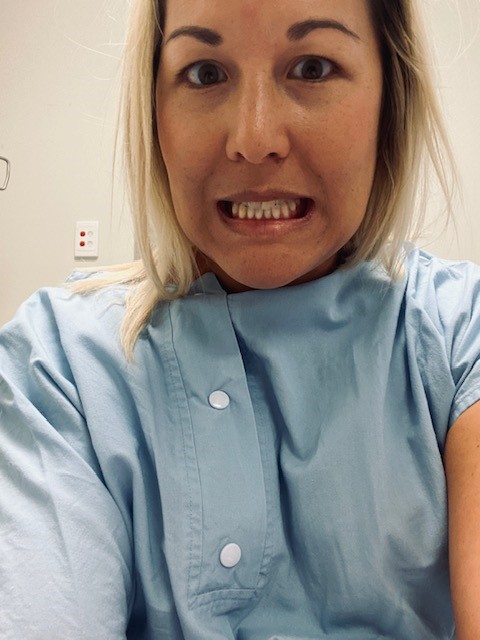
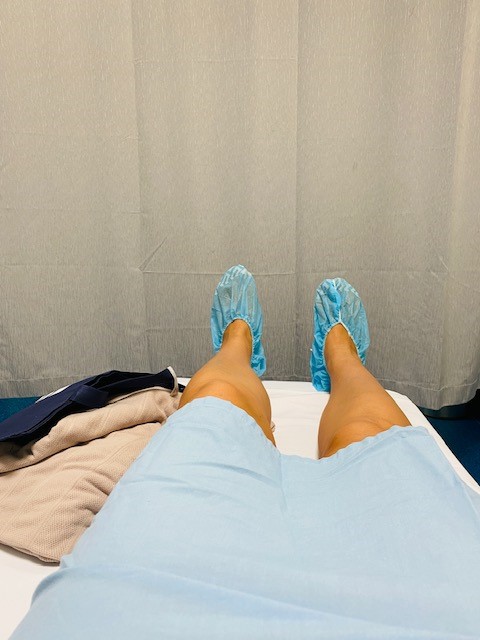
Dr Hadjipetrou my Cardiologist, came into the room to have a chat, let me know what was going to happen, what blood thinners (Aspirin and Plavix) I would be on and what not to do after the procedure. He also gave me some good news that I could dive after 3 months not 6 months but only conservatively (low risk) and after 6 months go back to diving as normal. I was very pleased about this! He let me know that it may be a bit of a wait due to a more complicated procedure going in before me. He wasn’t joking I waited for 3 hours. It was okay though as I fell asleep and it actually helped to calm my anxiety a bit so by the time I was going in I was joking around with the nurses and not really anxious at all. I had asked if it was okay to get some video and photos inside the operating theatre and Dr Hadjipetrou had really gone above and beyond to get permission for me to do this from the CEO of the hospital.
I had a chat to my Anaesthetist prior to entering the operating theatre. She advised me that I might have some pain when I wake up from the entry wound in my leg but also my throat as they will be inserting an ultrasound device down there which will sit behind the heart.
During the procedure a cut is made in your right leg where they insert the Catheter. Inside the Catheter the Cardiologist inserts a PFO device. Its actually incredibly interesting and innovative. The device travels through the Catheter in a vein from your leg to your heart. When the Cardiologist reaches the correct position through the other side of the flap in your heart the device is deployed and this closed the PFO/flap. Its sealed on the other side as well and ensured it is in position. This device stays permanently in your heart and your heart will form scar tissue over the device, ultimately sealing the PFO/flap permanently.
I entered the operating theatre and was hardly on the bed before the general anaesthetic went into my arm and I was out like a light.
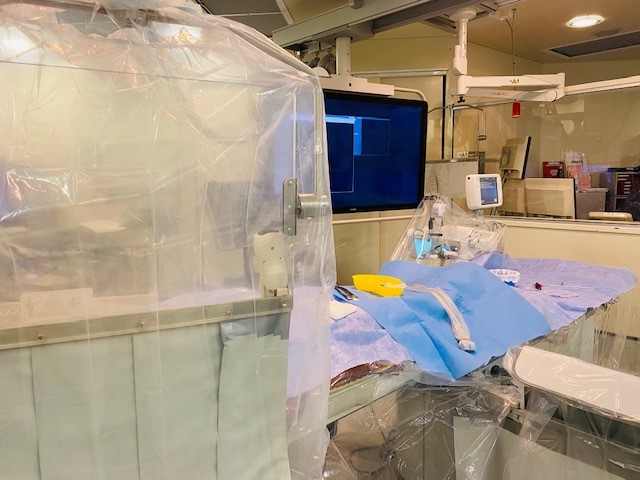
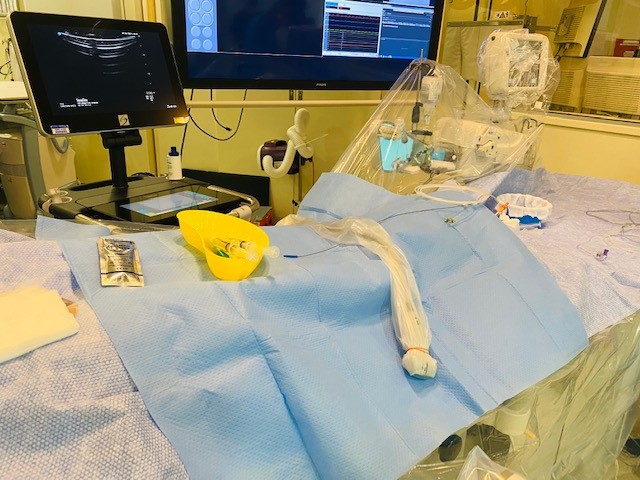
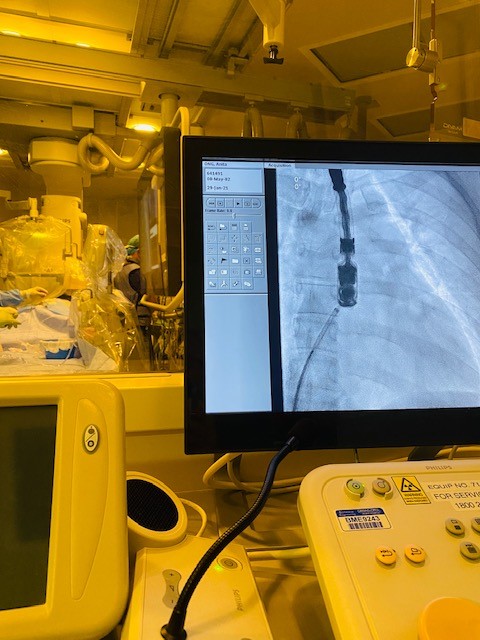
The team took some videos for me showing on an ultrasound (which was positioned behind my heart) my PFO, bubble study (showing how bubbles pass through from one side to the other with a PFO), and then closing the PFO. Videos taken at Greenslopes Hospital, Brisbane with my full consent.
My PFO on ultrasound:
Bubble study showing how bubbles can pass through from one side of the heart to the other.
The device is inserted:
After the device is inserted the PFO is closed.
Post procedure
I woke up pretty drowsy in a room with lots of lights on the ceiling. Trying to orientate myself , my mind was searching to see what felt out of place or sore. I couldn’t feel anything in my heart, I did feel slight pain in my leg from the entry wound and my throat from the ultrasound device. It wasn’t too bad. They gave me some Panadol through the catheter in my arm. It fixed the pain right up in my throat and my leg. It took me about 15 minutes to get out of the haze from the general anaesthetic and I was taken into a private room where I would spend the night.
I was glad for the general anaesthetic. Both my diving friends had been sedated instead, one of them actually watched the procedure on the screen which was hard core I thought.
I had a sandwich and was feeling fine, just exhausted so kept falling asleep. I say kept falling because I kept being woken up every 15 minutes by my blood pressure monitor that would jolt me awake by bumping loudly and squeezing my arm all of a sudden. Every 15 minutes for 4 hours afterwards my blood pressure was checking and regularly a nurse would come in to monitor my heart rate, blood pressure and pulse through my feet. The nurses said the wound on my leg kept oozing so they would check on it regularly.
I needed to pee. Due to having various cables connected to me and the heart monitoring machine I couldn’t go to the toilet. Instead I had to use a bed pan. That was a new and interesting experience to say the least. After a while I was able to go Portable with a handheld heart monitoring device and this meant I could use the toilet.
A nurse came in to give me a freshen up with a nice warm clean towel. Nurses are good humans, they would have to be the way they care for others. All the nurses made me feel great.
Being in the Coronary ward meant no cheese and crackers for snacks. I had the hearts healthy diet haha but it was pretty nice. I was happy with chicken, gravy and mashed potato for dinner. I opted out of the Asparagus soup though.
Nick came to visit after work and it was nice to have someone in the room with me for a short while. He watched cricket on my tv whilst I mostly slept.
I was given antibiotics as is common procedure when anything foreign to your body is inside you. I had one dose after dinner then the nurse told me all the times they would wake me throughout the night so I decided to try to get some sleep for a couple of hours at least around 8pm. At midnight I was woken, then 2am. I was given another dose of antibiotics. Back to sleep and woken again at 5am abruptly with lights on for a blood test. Shortly afterwards at 5.20am a nurse came in to take my Suture out of my leg. I wasn’t looking forward to this as my leg had been sore and every time the nurse touched it it was pretty sensitive. At this stage I hadn’t had any panadol since getting out of the operating theatre so I asked for some and got a couple of tablets.
The suture stung getting it out. This felt like when you cut yourself and go diving and the open wound has salty sea water on it. This sensation is because the spray they put on it acts like a thin film covering the surface which helps the wound not to ooze, and helps it to heal properly. It stung for a 5 minutes afterwards and was probably the worst part of the whole procedure.
I had my last dose of antibiotics and then the technician came in to do an echocardiogram of my heart. This is always a pretty intimate procedure as a woman because all the monitors have to go around your left breast and my technician in this case a pretty good looking dude has to sit against your bum with his hand mostly down your top as he smears lubricant on the area! You have to sit there for a pretty long time so that they can get the pictures they need on the ultrasound.
After that was finished I got to eat breakfast. Scrambled eggs and spaghetti with some fruit.
I got the Catheter taken out of my arm, which I was looking forward to! It bled for a bit because I was on blood thinners so I had to hold it for a while until it stopped bleeding. An attending doctor visited me with my discharge instructions. He advised how to take the blood thinners and when I would need to make my follow up appointments and so forth.
I was discharged at 11.30am and was just waiting on Nick to pick me up and my prescriptions for the blood thinners to be ready. Both came in around the same time and I left the hospital.
When I got home I pretty much slept for the rest of the day and following day. I was instructed not to lift, strain, push, pull, bump, jolt, or drive for at least 3 days afterwards, then no lifting anything heavier than 10kg for 6 weeks. I felt a bit paranoid about my leg, that all of a sudden it would start oozing again. I was advised if a large hematoma formed underneath the wound or if it started bleeding and wouldn’t stop that I’d have to go to the emergency ward and I wanted to avoid that. I would shower but try not to get the wound too wet.
The wound on my leg has developed a small lump under the cut and some bruising but its healing nicely. I can sometimes feel something in my heart, its not painful but probably the heart starting to heal scar tissue over the PFO device. My right leg feels weak and is a bit tender.
I returned to work after 4 days working from home, some people take a week off, and probably a couple of extra days would have been good in hindsight. I had some blood spots come up all over my legs and stomach. I got a blood test which confirmed everything was ok. I think the capillaries burst when I used a loofah in the shower. That’s how easy you can bruise/bleed on these blood thinners. 9 days after the procedure I pressed down on the incision in the shower and felt a hard lump. I rung 13 Health and they advised me to go to hospital to get an ultrasound and check it. My discharge instructions also said to attend emergency at the hospital if a hard lump develops.
The ultrasound at the hospital revealed that everything was ok. In some rare cases the wound can become infected or cause an aneurism. They showed me on the ultrasound the lump was caused from the trauma of the needle/catheter and was not near a vein or artery. I am having deeper sleeps than I have ever had which is great. I think its my body’s way of shutting me down whilst it goes to town repairing my heart. Two weeks after the procedure and I’m back to feeling myself again. Four weeks later I ended up having an allergic reaction to the medication (we think is most likely) and breaking out in hives all over my body and face. Dr Hadjipetrou advised me to stop taking the Plavix and I stayed on the daily Aspirin instead.
6 week appointment
I had an echocardiogram done at Greenslopes hospital by Hearts 1st. My follow up appointment was a few hours later with Dr Hadjipetrou and he said all looked good and there was no evidence of shunting meaning there was nothing moving in between the device or where the flap used to be. We spoke about me diving at the 3 month mark and keeping it very conservative until at least 6 months.
I’ll continue to update this blog.
Disclaimers:
*This is a personal account based on my own opinion of my journey with a PFO. I am not a medical practitioner and don’t recommend anyone to necessarily follow any of the steps that I have taken above. My primary reason for writing about this is to raise awareness about PFOs in the diving community. Had I understood more about PFOs myself I most likely would have saved myself many months of unnecessary pain and risk.
*I do recommend if you suspect a PFO or have any unwell symptoms after diving to seek medical advice from a medical practitioner that specialises in diving medicine.
*There may be differences to what I have written about above for other people’s PFO symptoms, and PFO operations.
*All references from other people that are mentioned above, are based on my memory of conversations and may not include all details for the purpose of outlining parts that I think are the most important in this blog.
*This blog post may change and be updated as I proceed to write about my follow up appointments over the next 6 months.


Leave A Comment